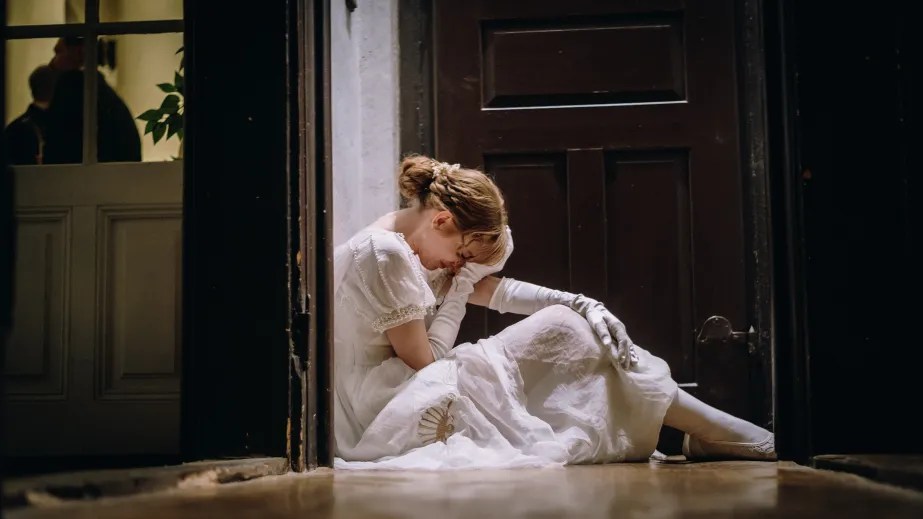
A Guest Post by Anna Velilla (Featured Photo by Meridian Photos from Atropos Studio’s Mayfair Larp.)
Whether or not you intended to, you’ve used larp as therapy at one point or another.
Whether or not you intended to, you’ve used larp as therapy at one point or another.
Not because you neglected your mental health, exploited your coplayers for emotional labor, or had any intentions of doing so. Simply because larp is, by its very nature, therapeutic.
Larp allows its players to live the experiences of other peoples, other versions of themselves, and other species entirely. It creates opportunities for explosive emotionality, intense physicality, and free expression and exploration. Through larp, we may push our boundaries to find out where they truly lie, experience intimacy and bonding that can be elusive in daily life, and force ourselves into mindsets we could never before imagine or comprehend.
Growing up, physical touch was difficult for me to navigate. After my OCD diagnosis in adulthood, I found myself becoming resistant to all manner of touch as I struggled to communicate those boundaries in a way that didn’t lead to interrogation or offense. I knew it was particular types of touch that caused me discomfort, not all, but from a fear of having to specify and overexplain, I set a standard that I was anti-touch.
My very first larp, The Forbidden History: Eden Unmasked by Atropos Studios, challenged this precedent. The high level of immersion encouraged me to explore touch with my co-players in a way that I hardly permitted from friends and family at that point, and the tap-out mechanics made me feel safe in doing so. When my instincts to resist casual intimacy eventually rose, the understanding that I could tap out at any time caused me to pause and really consider, “Am I actually uncomfortable?” Sitting with and examining my feelings even momentarily revealed the answer to be “no” far more frequently than it was “yes.”
Before I knew it, I felt more comfortable with physical contact than I ever had, and with communicating when and how to adjust that contact when my OCD symptoms flared. For years, my therapist had been urging me to challenge and test my discomfort. It wasn’t until I started larping that I found a space where I felt secure enough in my boundaries—and that they would be respected—to heed her advice.
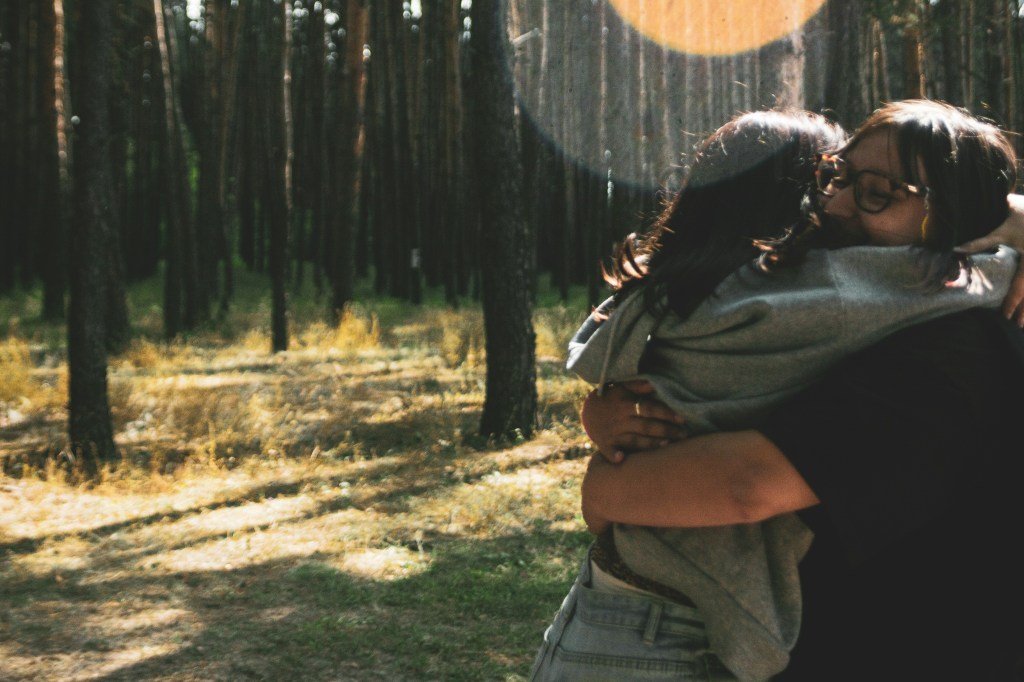
Larp has changed my relationship with touch completely. As a result, I am now often one of the most direct, communicative, and eager cuddlers at the afterparty.
While its benefits may seem obvious to some, I’ve observed opposition in the community toward the therapeutic value of larp—likely due to past negative experiences with a coplayer or fear of how such an admission might be perceived. But within friendly circles and private conversations, who can deny the oft-healing effects of the hobby? Who could underestimate the impact of such an enlightening and experiential art form? Who would really disagree that larp is therapeutic for those brave enough to allow it to soothe the scars it dares to reopen?
It’s not always the cleanest or gentlest process. Sometimes we end up entrenching ourselves in emotions and mindsets we imagined buried; reminded, despite our reticence, of estranged friends, decades-old damage, or previous versions of ourselves. Sometimes we are haunted by the ghosts and gore of the past through the casting process. We flag and we disclose our triggers and traumas, but there is no accounting for where the story will go. Because sometimes, the story takes us places we never hoped to revisit.
I had such an experience at my first game. Through happenstance and a seemingly innocent storyline initiated by a coplayer, I was enveloped in memories of my greatest trauma on the last day of the larp. I removed myself from the game and struggled to rejoin it—mostly due to an inability to stop crying. But the privacy and kindness offered to me by the safety team gave me the space to eventually rejoin the game, and I left the venue the next day able to reflect on the experience without regrets. I lost a few hours of precious gameplay sobbing alone in the woods, and in exchange, I gained a lightness and a greater openness about an experience that I had previously thought long-healed (and had discovered was really just poorly buried).
The experience forced me to face emotions and triggers that I thought I had worked through, and that might never have surfaced without some intervention. Initially, I considered it an important lesson on my boundaries and disclosed the trigger on every sign-up form that followed. But that specific trauma is rather common subject matter in larp, so I knew I could not avoid it entirely. Lo and behold, it happened again: at my second-ever larp, the same trauma was the centerpiece of one of my best scenes. I struggled through the scene, but it was a satisfying and powerful storyline, so after taking half an hour off-game to privately process my emotions, I left that larp deeply satisfied. In fact, the more I encountered that trigger, the more comfortable I grew with the same subject matter that had, for a long time, turned my stomach to stone.
Discussing the traumatic event that created the trigger for years beforehand—with friends and family and therapists alike—had not repaired the wound half so well as entrenching myself in the pain and discomfort of the memory in a larp. It is not an approach I would recommend widely or without years of therapy and the necessary equipment in one’s mental health toolbox, but it is an aspect of the larp experience that has been immensely helpful to me.
Which cuts to the core of my message: none of this growth would be possible or positive without the aid of therapy. It is not the responsibility of your coplayers to help you untangle and process whatever emotions are excavated from the experience. Larp can be supplemental, but it should never be the primary vehicle for healing.
Larp is not and should not be your therapy—but it is therapeutic.
A member of my organizing team, Paul Gentemann, echoed a similar sentiment not long ago while discussing the police raid that took place at the Airbnb he manages months earlier. His therapist immediately restructured their sessions to tackle the traumatic event, but they had had to delay due to the weeks of larping he already had planned.
The week after the raid, he was preoccupied running a playtest for his larp, As You Wish. He expressed that he found it soothing to be among friends in that space, as it slowly replaced the Airbnb’s association with guns pointed at his face. He attended his first two international larps directly after, which provided distraction and positive experiences at a time when he needed them most. In his words:
“I didn’t just think happy thoughts and fly around; I lived, I argued, I played piano in front of a small audience. I dueled, I had scandalous sex in a chapel, I married couples as an Anglican minister. And I met some very cool people. All of this has therapeutic value, and in the end, the police raid required a lot less unpacking than my therapist and I expected.”
My larp organization, Secret Garden Studios, was founded on the principle that larp is therapeutic and can be utilized as such. Our mission is to design larps that provide our players with opportunities for growth, healing, and self-exploration.
Our recently announced multi-day larp, Vanitas, was created to be a cathartic space for artists and art lovers who feel frustrated and disheartened by the corrupting influences of capitalism. However, while the central themes of the larp surround artistic creation, our true focus is on the internal play and profundity of the journeys the characters will undergo. Making art is simply the vehicle for the sort of soul-searching and interpersonal drama that our larps are founded on. The aim of Vanitas is to offer players the chance to spend two full days reflecting on their character’s choices, purpose, and path in life. And, in doing so, provide our players a platform in which to reflect on their own.
Whether you’re experiencing things you might never otherwise get the chance to try, or exploring storylines scarily similar to your real life, the therapeutic potential of larp is not something to shy away from or be ashamed of. Larp can be the medicine we need… for those brave enough to admit it.
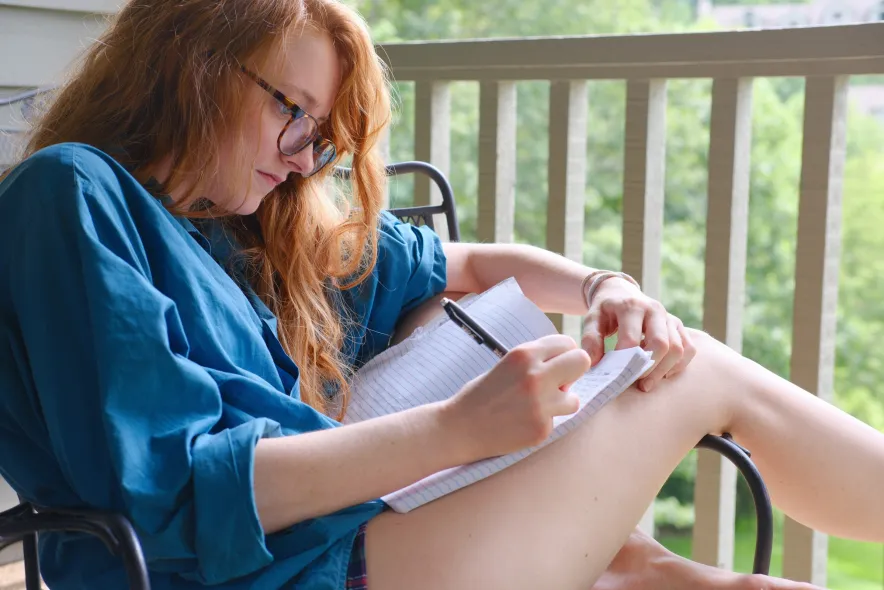
Anna Velilla is a writer, larp organizer, copyeditor, mostly reformed theatre kid, and founder of Secret Garden Studios LLC. She started larping in 2024 at The Forbidden History: Eden Unmasked and has done little else since.
She’s written and run three short-form games since discovering larp, and recently announced Vanitas, the first multi-day larp she and her studio will run. In 2025, she was a crewmember and dealer for certain runs of Indenture by Atropos Studios, and in 2026, she will serve as a facilitator for Conscience USA and Dresden Files Denmark, both of which are being produced and run by Mooney Bin Entertainment.
What sparse free time she has left is usually spent writing novels, binging sitcoms, collecting vintage books, babysitting as much as possible, and ranting about the incomparable works of Jane Austen.
 The Space Between Stories
Leave a comment