
(Featured Photo by M. G. Norris Photography from Helicon Run 1, US designed by Katrine Wind and Maria Pettersson, Produced by Journeys and Tales.)
“You wanna dance this next one?”
“Sure, mind if I follow?”
“Not at all, I’ll lead.”
And then we walk to the closest open spot on the floor and wait. My arm slides up my partner’s bicep, hand coming to rest lightly on their shoulder. Their arm comes around my back, their hand nestling somewhere between shoulder blades and ribs. We shift, finding comfort and closeness with each other’s bodies in the spare moments of silence while we wait to see just what we signed up to do. Will the song be blazing fast? Slower? A chuggy charleston?
Then the music hits. And, at first, we barely move. We listen. I catch the tempo, the press of other couples around us. Slowly, we begin to pulse together. We let the music fill us in this partnership. We both begin to weight shift together in time with the song. Once we’re certain we have hold of the music, hold of each other, and hold of what our partnership feels like in this moment, then we start the action starts. Then we begin the “moves” – the showy things that other people will notice.
But the dance started the moment we agreed to walk into that space together.
I do this at least a dozen times a week, sometimes twice or triple that. Half the time, the music hasn’t started before we’re on the floor. I have no clue what we’ve gotten into, but I sure as hell know I’m not going to start until I know what kind of art my partner and I are going to create together.
When I’m teaching Lindy Hop 101, one of the most important things I teach is this home base. If you ever lose each other in your dance, you can always come back home. People usually call it jockeying, but I prefer to call it home. It is one of the cornerstones of the dance – our connection to the music, to the floor, and to each other. We can do nothing if we have lost home base and we can do nothing if we don’t start connected to the music as much as our partnership.
Now, I know you’re all saying “But Ericka, this is a larp blog, should I come back next week for the crying and the drama?” But I promise you, practicing the steps of the anecdote above will make you a better storyteller. Everything we create together is informed by the scenes around us and the partner we are telling the story with in that moment. Taking just a few seconds to stop, listen to the music, listen to your scene partner, and make certain you are both on the same page before diving into something dramatic or showy will make not only your scene more grounded, but your big showy moments more effective for doing them at the right time.
Originally, I thought of this post in terms of dyadic play. We do a lot of dyadic larps these days, and having a strongly grounded partnership with the person you are connected to will drive you both to having better scenes the entire game. I’d HIGHLY recommend using this technique to anyone who is entering into dyadic play – especially if you are doing it with a partner you don’t know well. It’s almost a way to do mini-calibrations without words mid-game consistently. Coming back together, taking a breath, and taking a moment to drink in the world around you as a pair will help cement you both as a joint force.
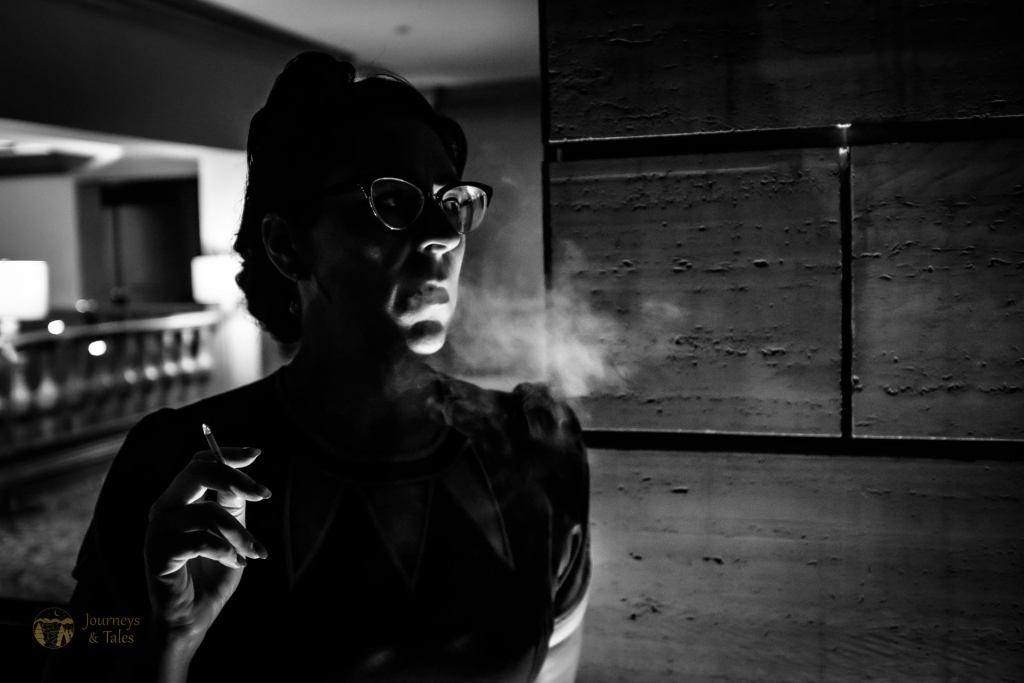
However, then I thought more about it and isn’t every scene a partnership? Even if it’s not someone you are in an intense relationship with, a conversation takes at least two people. And even if I’m not speaking in a scene, I am in partnership with the greater scene that is happening around me. Hell, even if I’m in a solo scene – I’m in partnership with the game’s design and where I am in the timeline of the game’s pacing. Every scene is co-created between the surroundings, the design, the other players, and yourself just like every dance is created by the music, the dance partners, the floor, and the other people dancing in the space around them.
Therefore, I invite you to stop and listen to the music of the game around you whenever you can – your roleplay will be better for it. Now, I’m not saying to pause every scene you are doing between entering a different room or interrupting conversations. Please, my anxiety filled friends, do not get in your head about this advice. However, when it makes sense, take the time to stop and listen – really listen – and see what that tells you about the scenes around you.
If you aren’t in the middle of some intensely driving emotion or goal-oriented driving action, take the chance to step into a room, take a deep breath, and simply listen. Don’t worry about what you are going to do next. Don’t think about where you need to be or who your character should be talking with. Don’t feel guilty that you aren’t giving people good roleplay. Don’t try to figure out what the next steps in your revenge plan should be. Just stand there and listen while remaining in character.
Listen to the scraps of conversation around you – what is the general mood of the room? Are people tense or relaxed? Is someone falling in love in the corner? Is there a family going through grief? Are people plotting treason? Figure out where the energy is and where the lulls are. See who is alone, who is in tiny little clots of people and where the big groups holding court take position. See if you can get the feeling of where we are in the game designer’s vision just by listening to the beats of the scenes around you.
Is there something missing? Are we in a super tense cyberpunk fantasy and no one looks paranoid? Then find that kernel of paranoia in your character, the one anxiety on your sheet, summon it up and start a paranoia-filled conversation around that topic.
Is it going perfectly? We are in the fairy harvest ball, everyone is dancing, drunk on the music and the magic and if you just let your eyes blur a little bit you wouldn’t even realize we were on earth any more? Then let your eyes blur and let your character get swept up into the magic to add to the revel of it all.
Instead of trying to figure out how best your character can make an impact on the scene – listen to the scene and figure out how best THAT SCENE (and the game design around it) can make an impact on your character! We aren’t here to do one-person solo monologues in a black box off-Broadway theater. We are here to co-create an experience that a designer has artfully laid out for us, but we can’t co-create if we don’t genuinely listen to what the other players are creating with us and embrace the scene as a whole.
Also, sometimes what you hear is “Now is not the time.” If the room is full of chaos, over-stimulation, and two other people already having their big dramatic moments? Maybe this isn’t the time for your big dramatic moment. If there is a way to help highlight their moment, great! If your character wants to be swept away reassuring them, do it! Conversely, sometimes you realize it really is the time and you’ve just been very busy taking some quiet scene assessment, so you need to quickly ramp yourself back up to whatever emotion is overwhelming you. Let the quiet drive you a little insane. Let the screaming in the back of your head get too loud and just GO. These moments of listening are not pauses or stops in your game or your character’s story, they are just moments to assess and course correct (or dive in deeper).
Frankly, I do them all the time out of character at places other than dances. I’m a party. I step into another room and see who is there, how the drinks are flowing, how loud the music is? Do I want to be here or not, do I want to pet a cat somewhere else, or do I just want to go to bed? This is a natural part of being human that we often forget to include in our characters. Just put the social check-ins back into your character’s brain pattern.
Now, returning to dyadic play. It’s easy to do these moments of listening with a partner, there is just another step. You both come together after hectic scenes in another room, you take the moment to breathe with each other. A quick check in – is that person limping? Are their eyes red from crying? Is their collar unbuttoned? And what is your relationship when you come back together and ground like this? Are you each other’s grounding force or do you make each other worse? Do you drive each other back into play like firestorms, or more ready to face the war for having spent a moment in each other’s company? Do you fix their collar? Straighten their hair? Listening to your partnership, then listening to the room as a partnership and deciding your next steps creates an incredibly powerful dyad if that is the game you are looking to play with each other.
My last run of Monstrosity was a doozy. A violent, screaming, torture, blood-sucking-vampires horror movie doozy. I played one of the most physical characters of my life at the ripe old age of 42. I have never been rag-dolled across a space and thrown over couches as much as I was at that event. But, in all the chaos, my partner and I ended up being rocks for each other. We did not spend much time together the entire event. But each captured moment – a quiet fixing of hair, an adjusting of a blouse, a wiping away of some blood, the mantra whispered between us which became a theme for the entire weekend: “All manner of things may be won,” and a breath while we reassured each other we could be bulletproof. I don’t think either of our characters would have survived that game if we didn’t take the time to stop, listen to each other, listen to the world around us, ground, and then go back into the chaos at large. That partnership and just how quiet it was in the middle of a war will be sticking with me for a long time.
Let’s drill it down further: Solo play.
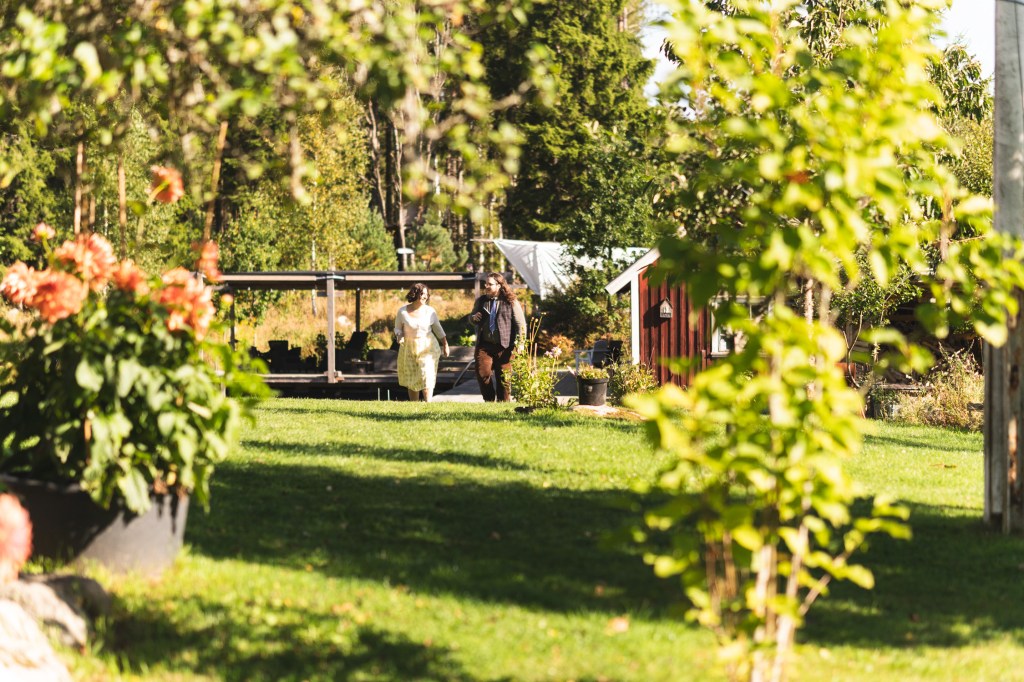
I love moments of solo play, and they give me the most time to listen to the radio-theater of the game around me than any sort of play beyond being a dead body. But let’s talk about extended solo play – just getting to live in a character’s body as a part of the setting for more than a few minutes alone. I find that slow-play larps have the most amount of time built into the design for play like this and it’s incredibly powerful (most of Atropos’ designs like Lord of Lies and The Forbidden History are good examples of this type). By taking so long to “listen to the music” of the setting, it lets me most deeply embody the character, the larp’s design, and how the character fits into that design – probably more than any other type of play I’ve experienced. I’m not only figuring out how my character feels in my body in this specific game, but I’m figuring out how she feels during that specific time of play in the story’s arc.
A perfect example would be from the last run of Lord of Lies. I took two different, long walks around the grounds during this game, one on day two and one on day three. During day two, I fell into the setting. I listened to the chickens, I felt the grass under my shoes, I listened to some of the girls giggling back near the house and the quiet mutterings of the “book club” meeting on the lounge chairs near the nature pool. I sat in my character’s nerves about the big ritual that night, the fear that everything was going to change, and let myself fall a little in love with our quiet life on this beautiful compound in the middle of nowhere. By the time I was done with my walk, I was nearly in tears because she didn’t want anything to change and she knew everything was going to be different after the big ritual. Instead of tears, she went to do some solo-ritual magic about it and then went back inside.
After both those scenes, I took that energy I had gathered from the setting around me and the larp’s design, poured it back into my character and then I poured it into the larp space. No one else saw those scenes, even if people saw the after-effects. But I am certain having that energy changed the game at large for the better.
In short, don’t be scared to listen. But do actively listen. Don’t be waiting for your moment. Don’t be planning what is next. Just take the time to listen – however long that takes, and let the act of listening influence everything you do in the space. I promise that what you create will feel more true to yourself, your co-players, and the design itself for having taken the time to listen to the music of the larp in the moment it is being played.
 The Space Between Stories
Leave a comment