
For as long as I have been LARPing, there have been game actions, downtimes, text roleplay, chat rooms, and other forms of ‘LARP’ which don’t actually take place at the LARP. Some might say they are the glue that holds strong campaign storylines together. For one-shot games, many people take this pre-game downtime to build strong character ties or factions. However, I am going to put forward a controversial opinion, one that I only learned when I first started roleplaying with Dystopia Rising (and I’m open to civil debate and feedback in the comments): I don’t think any sort of staff-facilitated between game roleplay is healthy for LARP. Game is at game. In fact, I don’t think off-game roleplay is healthy for most LARP in general (as ever, please take this opinion with a grain of salt, your mileage may vary, and there are always situations which lay outside the norm). I see between-game plot and roleplay doing far more harm than good, and here’s my reasoning:
It Promotes Negative Bleed/Obsession: In our technological day and age, between Discord, Facebook, forums, email, and people living on their phones, having active between game roleplay access means that if someone never wants to disconnect from the game, they don’t have to. They can stay up to all hours of the night roleplaying with friends and then expect answers from their GMs during the days or evening hours after work. They have no reason to break out of the game world (especially if life is going rather hard), and so they remain tightly tied to the characters, game brain-space, and emotions from the game as a way to escape from real life. Promoting such between game roleplay not only encourages this, it rewards it over people who don’t have the time to do so, leading to my second point…
It Punishes Busy Players: I’ve seen the pattern with myself and dozens of other friends — in our late teens and early 20s, we had hours and days to game. If we were lucky, we had nothing to do but go to school and then could spend all our other time immersed in our pretend world, a world which was far more enticing than the reality of our lives. As we got busier — jobs searches, jobs, careers, families, lovers, etc — that time cut down. We still love gaming and NEED those precious few weekends away at a LARP to remember what it’s like to play and relax. But we don’t have hours to spend on the computer doing proxies, in-between game actions, email thread scenes, or planning massive battles. In certain LARPs, this means the busy are left behind. They have no chance to hold important positions or get involved in high level plot. And, frankly? It sucks. I’d much prefer all players who actually are attending events have the same level access to storytellers and plot as people who are highly active between events.
It Exhausts Your Staff: Maybe this should be at the top of the list, because it’s one of the biggest issues I see: Writing plot for a LARP is exhausting if we’re JUST looking at running a long weekend. While players get time off between games, most of us staff members immediately start working on the next big event just a few spare days after our last one closed. If I had to facilitate between-game roleplay or actions as WELL as plan the plot for the entire next event? I’d burn out in a year. I see a lot of staff in burn out already. I see people struggling to write plot responses, which takes time away from the actual planning of the game itself. I’d much rather see staff members put extra energy to planning things to happen on the ground of the game and not writing things in a technological space.
It Creates Artificial Connections: For as many lovely stories, bonding, and personal plots I’ve seen come out of between game roleplay, I’ve also seen things that have been built up to be huge things fall flat on their face. It creates expectations of plot (sometimes between players, sometimes players and staff) that often don’t pan out once they are in live spaces. The chemistry between actual players in physical space is so different than the fantasies we build on the internet and it can create huge disappointment when the things you worked so hard on through between game roleplay fall flat in person. I have seen this the MOST in planning pre-game character ties (and doing pre-game RP) for one-shot, free form games. It can incredibly suck to go into a game and have your biggest relationships fall flat. Maybe it’s simply wiser to see with whom you click in the workshop?
It’s Called LARP: (Here’s where I’m going to get some hate, but please, hold onto the end.) LARP. Live Action Role Play. To me, this implies actually living in the space, acting out the characters, and being face-to-face in some fashion. Making plot for your game happen in spaces that are not live inherently takes away from a lot of the magic that LARPing is. Yes, I know there are simply things that CANNOT happen in a live play space — massive space battles (though we know people who run it, looking at you, Nerdy City), crazy away missions, something totally outside of your game space — but maybe this should be more responsive plot design to what you DO have instead of designing outside of those bounds. Inside Hamlet does this excellently with their warboard.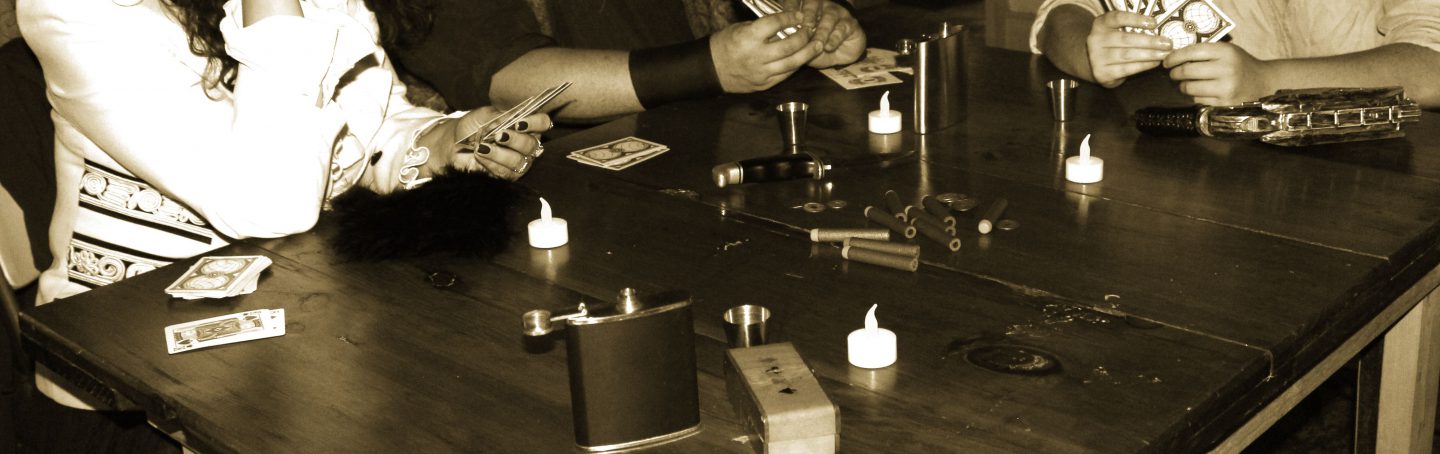
Now, this isn’t a black and white issue. Traditional LARPing is immensely ableist and it’s been very difficult to get away from ableist spaces in the weekend-long camp renting community. In addition, there are many people in my life (and myself at one point in time) who are in LARP-deserts and have no access to the kind of gaming that they love. Some players need to do between game roleplay to help with their bleed issues, as it helps them come out of game more than leaving things on cliffhangers. And yes, as mentioned above, sometimes there are things you just WANT or NEED to do in a plot which cannot happen in live game spaces (at least, not in the fully immersive, what-you-see-is-what-you-get LARPing that tends to be the trend these days.) I believe our wonderful technologies can help with this without forcing players and staff to spend more time LARP-Plotting on the internet than they do in live spaces.
Downtimes: This was old Mind’s Eye Society tradition from the very first days I started gaming. We’d have game once or twice a month and a general, in-person downtime to handle between game plotting or actions. The story staff would be present, players would be able to have face-to-face scenes, and people weren’t stuck on their email or IRC for hours at a time trying to handle plot responses. For games that require some sort of plot or facilitated communication between games, I absolutely think scheduled downtimes at certain hours are a good middle ground. They help manage player expectations for themselves and for staff time; don’t put your staff into burn out; and still keep some live in LARPing. Nowadays, downtimes could be run through Discord or Google Hangouts so people don’t even need to leave their homes while still having a more live experience.
Digital LARPing: Just because it takes place on the internet, doesn’t mean it’s not a LARP. From the old days of mIRC based ‘games’ where you could log in at set hours, there were storytellers, and they would run plot for us remote players for those few hours of a ‘game,’ to the modern day era of LARPs combining live, in-person play with remote play options, there is a way for live action to remain in the digital space. Some current games doing this are Emergent, Diablerie LARP, Doomsday, and several games from The Geek Initiative. While there is still a ways to go to include differing timezones and other challenges, it’s been exciting to see LARP transformed by the digital playspace.
On-Site Blackbox Areas: Abigail Corfman was the first person to take me into a black box, imaginary place at a what-you-see-is-what-you-get game, when she took us all to the Iron run village during a Dystopia Rising game, many years ago. We sat in a dark shed, eyes mostly closed, being talked through a far-away place in our imaginations. We still listened to each other’s breaths. At one point, I still held someone’s hand. A vivid, live experience occured in a way that could never have in our direct game space. While this is a method that shouldn’t be leaned on OFTEN, the old tradition of actually playing pretend could still be used in certain sections of more immersive games. Nerdy City’s X-Wing space battles is another excellent example of this sort of play. Let your players have access to bigger, off-site plot but still keep it during game time. The challenge here is doing it sparingly, so it has more power, instead of half the game being off in side rooms that aren’t actually present on site.
I’m immensely curious to hear people’s thoughts on this. Whether you have better suggestions as to how to fight the challenges that game-only-at-game presents, if you have other reasons you think between game LARPing is a poor idea, or if you think I’m totally wrong, please let me know in a constructive fashion. As ever, this is just the start of the discussion.


 The Space Between Stories
Leave a reply to Tara M. Clapper Cancel reply